Heat Protectant: How to Apply It Before Styling
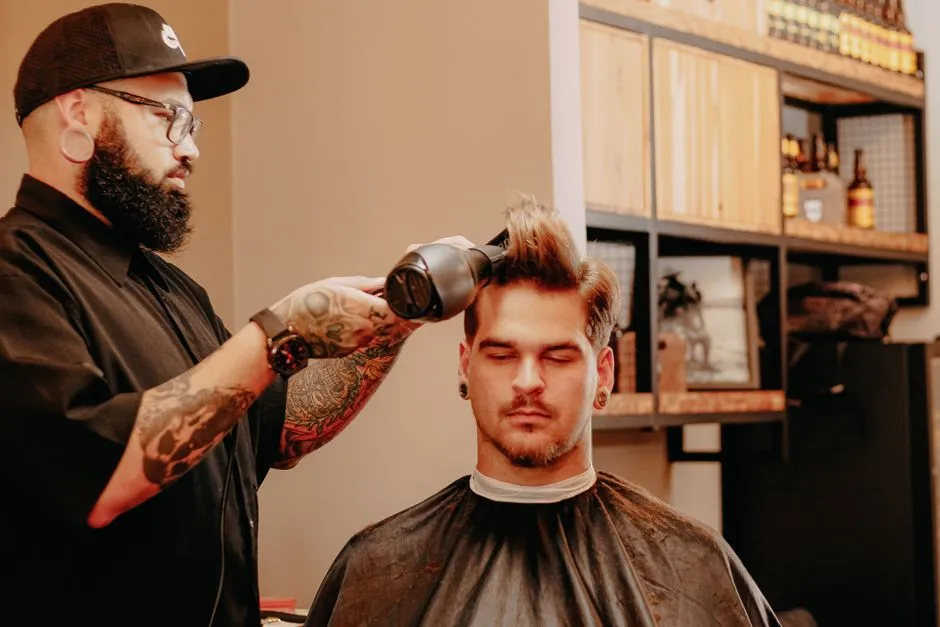
- Apply heat protectant immediately before the heat stage it covers
- When should you apply it in your styling sequence?
- Read four parts of the label
- Start with clean, conditioned, gently detangled hair
- Section before spraying
- Blow-dry damp hair in stages
- Dry completely before a conventional iron
- Choose temperature by condition, not curl type alone
- Do not use plain oil as an assumed protectant
- Recognise too much or too little product
- Stop for smoke, sizzle, burning, or irritation
- Reduce frequency instead of asking product to do everything
- Sources
Apply heat protectant immediately before the heat stage it covers
When to apply heat protectant depends on the product label and the next tool in your routine. Put a damp-hair formula on towel-dried hair before blow-drying. Put a dry-hair formula on fully dry hair before a conventional flat or curling iron. If one product says it covers both stages, follow its reapplication directions rather than automatically adding another layer.
Divide the hair, apply a light even layer, distribute it with hands or a suitable comb, and let any wet spray dry completely before clamping a hot tool. Then use the lowest effective temperature, minimise passes, and keep the tool moving. Protectant can reduce some heat-related damage under its intended conditions; it cannot eliminate damage or make maximum heat safe.
Hair that is bleached, relaxed, permed, fine, weathered, or already breaking may need substantially less heat or no hot-tool styling while its condition is assessed.
When should you apply it in your styling sequence?
Use the label to identify both the required hair state and the tool covered. This timing map turns those directions into an order of operations:
| Your next step | When to apply | What must happen before heat |
|---|---|---|
| Blow-dry towel-dried hair | Apply a product labelled for damp or towel-dried hair after blotting and detangling | Distribute by section and wait for any stated absorption time |
| Flat-iron or curl dry hair | Apply only a product labelled for dry-hair hot-tool use | Spread a light layer and let all spray wetness evaporate as directed |
| Blow-dry, then iron in one session | Apply before the dryer if the label covers it; reapply before the iron only if directed or use a compatible dry-hair product | Finish drying completely, check the second tool is covered, then follow the stated reapplication amount |
| Restyle the next day | Do not assume yesterday's layer still provides the labelled protection or that a full new layer is required | Check reapplication directions, consider buildup, and decide whether heat is necessary |
| Air-dry without a hot tool | Heat protection is not required for a heat stage that is not happening | Use the product only if its label gives another styling purpose you want |
A useful question is not simply “wet or dry?” but “which tool comes next, and what does this finished product say?” A thermal claim on a styling cream does not automatically cover a flat iron. A blow-dry primer may be designed for lower, moving air rather than plates pressing on one spot.
Wet-to-dry appliances are a separate category. Use one only when the appliance manual and the protectant directions explicitly describe that process. A social-media demonstration does not replace those instructions.
Read four parts of the label
Find:
- Whether to apply on damp, towel-dried, or dry hair.
- Which tools the product covers.
- Amount, distance, and section directions.
- Any maximum temperature, drying time, reapplication, and warning.
Use the exact finished-product directions, not the presence of one popular silicone in an ingredient list. Check whether the formula contains alcohols or fragrance that irritate your scalp, but avoid ingredient mythology. Fatty alcohols such as cetyl and cetearyl alcohol differ from volatile alcohols, and the whole formula determines performance.
Start with clean, conditioned, gently detangled hair
Product buildup can cause uneven feel, smoke, or repeated passes. Wash at a frequency appropriate to the scalp and styling routine, condition the lengths, and blot with a towel rather than rubbing.
Detangle using the approach that suits the texture: many curls and coils prefer wet conditioned sections, while fragile fine or straight hair may need careful wide-tooth detangling and less wet manipulation. The hairbrush type guide compares the options.
Do not heat-style an irritated, blistered, burned, or broken scalp. Persistent pain, sores, scaling, sudden shedding, or patchy hair loss needs evaluation by a qualified medical professional.
Section before spraying
Four to eight broad sections work for many heads, but density and length decide. A single mist over the crown leaves interior hair uncovered while coating the top repeatedly.
For a spray, hold it at the label's distance and move across each section. For cream or serum, emulsify a small amount between palms, smooth it through mid-lengths and ends, then use residue near roots only if the product permits. Fine hair may need less product and smaller amounts spread more carefully.
Comb or finger-distribute as appropriate. The goal is a thin film, not visible wet patches. Add product only to missed areas.
Universal spray counts are unreliable because nozzles, strand thickness, length, density, and formula differ. Use manufacturer guidance and record what gave complete coverage without buildup.
Blow-dry damp hair in stages
After application, allow the product's stated absorption or drying time. Begin by removing moisture with lower heat and moderate airflow. Hold the dryer at a comfortable distance and keep it moving.
When hair is mostly dry, use a concentrator and brush only where a polished finish requires them. Direct airflow down the strand and work in sections. Stop once dry; repeatedly reheating finished areas adds exposure with no moisture left to remove.
A diffuser spreads airflow for curls and coils, but the bowl can still trap heat near the scalp. Use the lowest effective heat and speed and move by zones. The hair-dryer comparison covers attachment tradeoffs.
If the scalp feels hot, increase the distance or reduce the temperature immediately. Stop if there is pain.
Dry completely before a conventional iron
Hair should be fully dry before a conventional flat or curling iron unless the appliance and product are explicitly designed and instructed for another process. A published dermatology case report described brittle, unevenly broken hair and hair-shaft defects after hot ironing wet hair. Its discussion explains that heat can vaporise water inside hair fibres into steam and damage their structure. A case report cannot establish how every tool affects every head, but it supports treating wet ironing as a specific risk rather than a harmless shortcut.
If the protectant used before blow-drying also covers the iron stage, follow its reapplication direction. If a separate dry-hair protectant is required, use a light even amount, distribute it, and wait until all wetness or solvent has evaporated as directed.
Test a small section at a low setting. Raise the setting only when needed. One controlled pass is preferable to several uncertain passes. Smaller sections may straighten more evenly at lower heat, but sections that are too small can receive excessive repeated handling.
Clean cooled, unplugged plates according to the tool manual. Product residue can drag, smoke, or create uneven contact.
Choose temperature by condition, not curl type alone
There is no universal temperature that maps neatly to curl type. Fibre diameter, bleach, colour, relaxer, perm, previous heat, moisture, tool calibration, pass speed, and product all matter.
The American Academy of Dermatology recommends letting hair air-dry when possible, using the lowest heat setting, limiting the time a hot comb or curling iron touches the hair, and using hot tools less frequently. Begin low and judge whether the style forms without repeated passes. Reduce further for visibly weathered, brittle, chemically processed, or snapping hair.
Consumer tool dials may not equal actual plate temperature, and temperature can vary across the surface. A printed number is not permission to ignore smell, smoke, drag, or breakage.
Do not use plain oil as an assumed protectant
Plant oils can condition, reduce friction, or finish a style depending on use, but a kitchen oil's smoke point does not demonstrate protection on hair. Oil can alter heat transfer and create smoke or weight.
Use a product explicitly designed and labelled for the tool and temperature range. If adding finishing oil, apply it after the hair cools unless the product says otherwise.
Likewise, aerosol hairspray and dry shampoo are not default heat protectants. Some product labels carry flammability or hot-tool warnings. Read them, keep sprays away from ignition sources, and do not spray while a hot tool rests nearby.
Recognise too much or too little product
Possible under-application signs include uneven slip and sections with no coverage, but damage cannot be diagnosed from one styling result. Improve sectioning and distribution rather than spraying more randomly.
Too much product can leave hair wet, stiff, greasy, limp, coated, or smoky under heat. Clarify or cleanse according to hair and product guidance, then use less next time. Do not add repeated layers daily without considering buildup.
The hair-mask buying guide explains conditioning versus protein and buildup. A rich treatment and heavy protectant can overlap, so simplify the routine before changing several products at once.
Stop for smoke, sizzle, burning, or irritation
Visible vapour may be evaporating water or volatile ingredients, but sizzling, smoke, scorching, or a burning odour means stop. Switch off and unplug the tool, move it to a heat-safe surface, and let the hair and appliance cool.
Check whether the hair was dry, the tool was clean, and the product was used within its directions. Retire a tool with a damaged cord, cracked housing, sparks, intermittent power, or uncontrolled heat.
For a burn, the UK National Health Service advises holding the area under cool running water for 20 minutes as soon as possible and within three hours; it says not to use ice or greasy substances. Large, deep, white, charred, facial, neck, hand, foot, joint, genital, electrical, chemical, or smoke-related burns need emergency assessment under its guidance. Use the emergency service and medical route for your location. Breathing trouble, severe swelling, or eye exposure also needs urgent professional help.
Reduce frequency instead of asking product to do everything
Stretch styles with wrapping, loose protective arrangements, rollers, or lower-heat refresh methods suitable to the texture. Avoid tight tension that trades heat damage for traction. Rotate heat-free days.
Patch-test dyes and perform strand tests as directed before chemical colour. Bleach and relaxers damage hair and can injure skin; do not overlap services casually. The U.S. Occupational Safety and Health Administration reports that some hair-smoothing products may contain or release formaldehyde during use, including products it found were labelled “formaldehyde free.” In workplaces using products that may contain or release formaldehyde, OSHA requires applicable hazard communication and formaldehyde controls, which can include air testing, ventilation, protective equipment, and training. This is a professional workplace-safety issue, not a home ventilation experiment.
The practical sequence is simple: read the label, identify the next tool, section, cover lightly, wait as directed, dry fully before a conventional iron, set heat low, make few passes, and stop at warning signs. Heat protectant is useful risk reduction. If the routine only works at maximum heat, change the routine rather than increasing the product.
Sources
- American Academy of Dermatology, How to Stop Damaging Your Hair — lowest-setting, reduced-contact, reduced-frequency, and air-drying guidance. Accessed September 4, 2026.
- Savitha, Sacchidanand, and Revathy, Bubble Hair and Other Acquired Hair Shaft Anomalies due to Hot Ironing on Wet Hair — case details and the proposed steam-damage mechanism in wet hair. Accessed September 4, 2026.
- U.S. Occupational Safety and Health Administration, Hair Salons: Facts about Formaldehyde in Hair Products — findings and workplace controls for products that contain or may release formaldehyde. Accessed September 4, 2026.
- UK National Health Service, Burns and Scalds: Treatment — immediate cooling and emergency-assessment guidance. Accessed September 4, 2026.