Best Hairbrush Types: Detangle, Smooth, or Shape
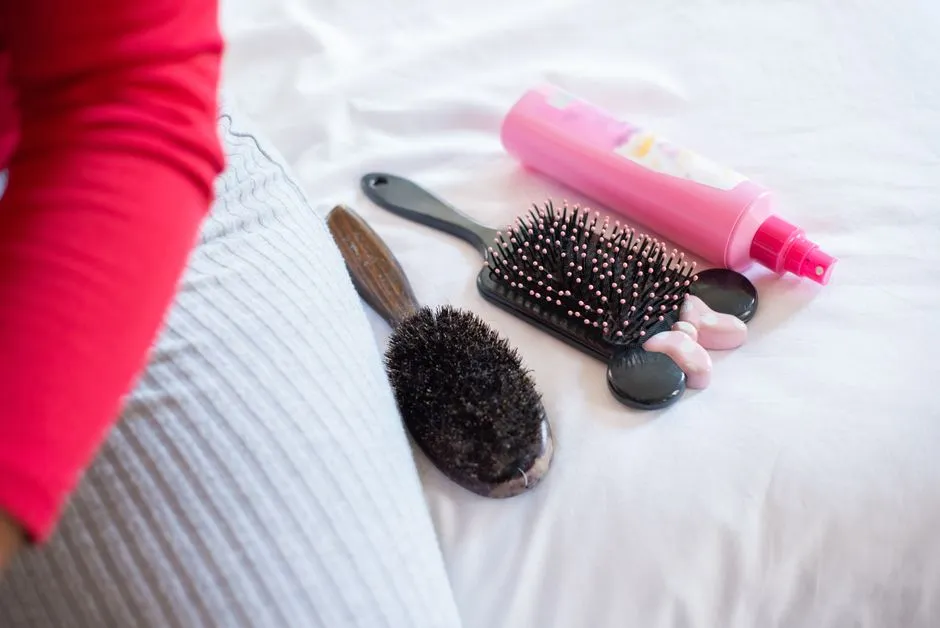
- Which hairbrush type is best for each job?
- Should hair be brushed wet or dry?
- What makes a detangling brush worth buying?
- Paddle brush vs round brush: which should you choose?
- When does a vent brush help?
- Are boar, nylon, wood, or metal bristles better?
- How should a tail comb be used safely?
- A ten-point hairbrush buying check
- How many brushes do you actually need?
- How should a hairbrush be cleaned and replaced?
Which hairbrush type is best for each job?
The best hairbrush is the one that does one defined job with low, controllable tension. Choose a flexible, widely spaced brush for detangling wet conditioned curls or coils; a paddle brush for broad smoothing; a vent brush for directing hair during rough-drying; a round brush for blow-dried bend and volume; or a soft, dense brush for finishing already-detangled hair. Most people need a detangler and one styling brush, not a large collection.
This is a comparison of brush categories, not a ranking of individual products. We did not hands-on test specific brushes. The recommendations below use construction, task, cleanability, and current dermatology guidance as the decision criteria.
| Job | Start with | What to inspect | Main limitation |
|---|---|---|---|
| Detangle wet, conditioned curls or coils | Flexible brush with widely spaced teeth or clusters | Smooth moulding, controlled flex, usable section size | Excessive flex can pass over the centre of a knot |
| Detangle straight or fine hair | Fingers or a wide-tooth comb, then a gentle brush if needed | Rounded, seamless teeth and low resistance | Unnecessary wet brushing can increase breakage |
| Smooth dry straight, wavy, or stretched hair | Paddle brush | Pin finish, pad movement, grip, easy cleaning | Dense pins can pull fragile or tightly textured hair |
| Direct hair during quick rough-drying | Vent brush | Smooth frame joints, rounded pins, comfortable handle | Openings expose the scalp directly to dryer airflow |
| Create bend, lift, or a curved finish | Round brush | Barrel diameter, bristle density, secure end caps | Hair can wrap, snag, or receive repeated heat |
| Polish the surface of detangled hair | Soft, dense finishing brush | Bristle softness, materials, cleaning method | It is not a deep-detangling tool |
| Make precise parts and sections | Tail comb | Smooth teeth and a rounded, well-finished tail | Fine teeth concentrate tension; the tail can scratch |
Should hair be brushed wet or dry?
Hair state matters as much as brush type. The American Academy of Dermatology (AAD) says most people should handle wet hair as little as possible because wet hair breaks more easily when combed or brushed. It gives an important exception for tightly curled or textured hair: brushing while wet can reduce breakage. Its curly-hair guidance recommends thoroughly wetting the hair, applying a leave-in conditioner, and detangling in sections with fingers, a wide-tooth comb, or a brush made for curly hair.
That produces a practical rule rather than a universal slogan:
- For curls and coils, detangle wet, lubricated hair in small sections when that preserves the pattern and lowers resistance.
- For straight, wavy, fine, bleached, or otherwise fragile hair, limit wet handling. Allow partial air-drying when practical, then use a wide-tooth comb or gentle brush only as needed.
- For any texture, begin at the ends and work upward. Support the section above a knot, stop pulling when resistance rises, and separate the knot with fingers before trying again.
The AAD also advises keeping brushing to the minimum needed to style hair; its damage-prevention guidance notes that repeated brushing can contribute to split ends. A brush is not gentler merely because its packaging says “detangling.” The meaningful test is whether its teeth, seams, spacing, and flex let you control resistance on your own hair.
What makes a detangling brush worth buying?
A useful detangling brush combines wide spacing, smooth surfaces, and enough flex to yield without folding away from the knot. Flexible rows or clusters can help hair move through the tool gradually. A sturdy wide-tooth comb may be easier to control on dense sections because every tooth follows the same path.
Inspect the entire route that hair travels. Look between teeth, around the outer frame, where the pad meets the body, and around any decorative cap. A rounded tip can still snag if its moulding seam is rough or its bead is cracked. Run a fingertip over those joints before purchase; this checks finish, not whether the brush is universally safe or suitable.
Use the tool with conditioner or a detangling product suited to the hair. Divide dense hair into sections that the brush can actually pass through. If the face of the brush glides over a section while knots remain underneath, reduce the section size or switch to fingers or a firmer wide-tooth comb. Repeatedly dragging a very flexible brush over an unresolved knot adds passes without solving the problem.
Do not brush over scalp sores, burns, fresh chemical irritation, or a painful area. Sudden, patchy, painful, scarring, or persistent hair loss, scalp inflammation, or a major change in shedding needs assessment by a dermatologist or another qualified clinician. A brush cannot identify or treat the cause.
Paddle brush vs round brush: which should you choose?
A paddle brush and a round brush are not substitutes. A paddle brush guides a broad section in a relatively straight path. A round brush deliberately wraps part of a section around a barrel to create bend and tension.
Choose a paddle brush when the goal is everyday smoothing, directing straight or stretched hair, or covering more surface area per pass. Check that the pad does not collapse unpredictably, pins are firmly seated, and the handle lets you keep your wrist neutral. A broad brush can tempt you to take too much hair at once; narrower sections give better tension control on thick or fragile hair.
Choose a round brush when the goal is curved ends, root lift, or a shaped blow-dry. Smaller barrels create tighter curves and suit shorter sections. Larger barrels make broader bends and generally suit longer hair. Choose a diameter that allows a partial wrap without winding the section around the barrel several times. The hair section should be no wider than the working part of the barrel.
Round brushes need a deliberate exit path. Rotate only enough to maintain control, then unwind in the reverse direction rather than pulling the barrel through resistance. Over-rotation, loose ends, an overly wide section, and very dense bristles can trap hair. If a brush becomes stuck, turn off the dryer, stop pulling, support the section, and unwind small strands from the outside. Do not continue applying heat while trying to release it.
When does a vent brush help?
A vent brush has open channels through its body. It is useful for guiding short hair, lifting roots, or directing sections during a quick, less-polished rough-dry. It does not create the broad alignment of a paddle brush or the curved tension of a round brush.
Inspect every opening and frame joint because long hair can enter gaps around poorly finished moulding. Rounded, smooth pins matter more than a “salon” label. Choose a handle you can hold securely without squeezing hard.
During blow-drying, keep the brush and dryer moving and use the lowest effective heat. The AAD recommends partly air-drying before styling where possible and limiting hot-tool exposure; its hair-loss care guidance also recommends the lowest heat setting on a blow-dryer. Open vents can direct hot airflow onto the scalp, so stop if the scalp feels hot or painful. Our hair-dryer type guide explains why independently adjustable heat and airflow are more useful than a single high-power setting.
Are boar, nylon, wood, or metal bristles better?
Material alone does not determine performance. Spacing, tip finish, stiffness, flex, mounting, and the intended task usually tell you more.
- Nylon pins range from very flexible to rigid. Check the actual tool rather than assuming all nylon feels alike.
- Traditional boar bristles are animal-derived and are not vegan. Dense natural or synthetic bristles may smooth the surface of dry, detangled hair, but they may not reach through thick sections.
- Mixed-bristle brushes may combine animal and synthetic fibres. Check the bristle, pad, adhesive, and handle disclosure if vegan sourcing matters.
- Wood pins can feel firm and smooth, but water tolerance depends on the finish and construction.
- Metal pins may be smooth, yet they can bend, expose rough ends, and conduct heat.
- Flexible elastomer teeth can suit detangling, but rough moulding or damaged edges can still catch hair.
No bristle material is automatically antistatic, hygienic, damage-free, or suitable for every texture. A soft finishing brush can distribute surface oils along suitable straight or stretched hair, but it is not a knot remover. Claims that brushing “stimulates growth” should not drive the purchase: brushing does not treat genetic, autoimmune, hormonal, nutritional, infectious, medication-related, or scarring hair loss.
How should a tail comb be used safely?
A tail comb is a sectioning tool. Its narrow teeth can refine a part or control a small section, while its tail can trace a line through the hair. It is not a first-line detangler for resistant knots because fine teeth concentrate force across a small area.
Choose seamless teeth and a smooth, rounded tail for home use. Move the tail through the hair rather than pressing it into the scalp. Keep the pointed end away from eyes and store the comb where it cannot fall point-first. Metal tails can become hot near styling tools and can scratch the scalp.
Sectioning should not become tight styling. The AAD’s traction alopecia guidance explains that repeated pulling from tight hairstyles can damage hair and may eventually cause permanent hair loss. A style that hurts is too tight. Loosen it and seek medical advice for thinning, broken hairs around the hairline, bumps, or ongoing scalp symptoms.
A ten-point hairbrush buying check
Use this check before comparing branding or price:
- Name the job: detangling, smoothing, rough-drying, shaping, finishing, or sectioning.
- Decide the hair state: wet and conditioned, damp, or fully dry.
- Match spacing to density: the tool must reach the section without excessive force.
- Check every contact surface for rough seams, cracked beads, exposed wire, or sharp edges.
- Press the pad or rows gently to see whether the flex is controlled rather than unstable.
- Hold the handle in the working position and confirm you can maintain a light grip.
- Check the maximum section the tool can handle without crowding.
- Read the material disclosure, especially for mixed or animal-derived bristles.
- Read the cleaning instructions before buying; a brush that cannot be cleaned as used is a poor fit.
- For heat styling, confirm that the brush can be used with the dryer setting and technique you intend to use.
Price, colour, and a long list of marketing terms do not compensate for a rough seam or a tool that does the wrong job. If shopping online, look for close images of the tips, frame joints, pad, and handle rather than relying on the front view alone. Confirm the return policy before trying a tool that may not suit your hair density or hand comfort.
How many brushes do you actually need?
A practical starting kit has two tools:
- one low-tension detangling tool matched to the hair’s wet-or-dry routine; and
- one styling tool matched to the result, such as a paddle, vent, round, or finishing brush.
Add a tail comb only if precise sectioning is part of the routine. This approach makes each purchase answer a distinct need and prevents several nearly identical brushes from competing for the same job.
Technique still matters more than quantity. Conditioner or a hair mask matched to the actual need can provide slip when appropriate. Smaller sections, fewer passes, and lower tension reduce unnecessary handling. When using heat, apply heat protectant as its label directs and let any wet product dry before contact with a flat iron.
How should a hairbrush be cleaned and replaced?
Remove shed hair regularly with fingers or a tool that will not cut the pad or scratch the bristles. Then follow the brush manufacturer’s cleaning directions. Some sealed plastic or synthetic brushes tolerate mild soap and water. Wood, natural bristle, cushioned pneumatic pads, bonded parts, and brushes with hidden air holes may swell, loosen, or retain water if soaked. Let the brush dry fully in the orientation the manufacturer specifies.
Head-lice cleaning is a separate case. The US Centers for Disease Control and Prevention says to soak combs and brushes used by an infested person in hot water of at least 130°F for 5 to 10 minutes. That instruction is for lice treatment, not routine cleaning, and heat may damage a brush that is not made to tolerate it. Follow the treatment directions and public-health advice rather than improvising with pesticides; the CDC says not to use fumigant sprays or fogs because they can be toxic if inhaled or absorbed through the skin.
Replace a brush when tips crack, beads disappear, pins bend, rust appears, the pad peels, the handle splits, or residue cannot be removed. Stop using any tool that scratches, snags, or exposes a sharp component. The best hairbrush is not a universal material or shape; it is a sound, cleanable tool that completes its assigned job without unnecessary tension.